
 France


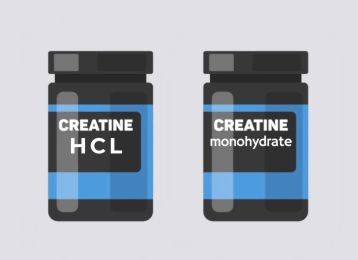
Walk into the creatine aisle — online or offline — and you'll quickly run into two names: Creatine Monohydrate and Creatine HCl (Hydrochloride). Both promise strength, performance, and muscle support, but they work slightly differently. Here's what actually separates them, and why some products — including Lifwel's Gold Multi Creatine — combine both.
What Is Creatine Monohydrate?
Creatine monohydrate is the original, most widely studied form of creatine. It's been the gold standard in sports nutrition for decades, backed by hundreds of clinical studies confirming its safety and effectiveness for building strength, power, and lean muscle.
Strengths:
- Most researched form of creatine available
- Proven track record for strength and performance gains
- Generally affordable and widely available
Common concern: Some users report mild bloating or water retention, especially during a "loading phase" with higher doses. This is usually temporary and related to water being drawn into muscle cells — not fat gain.
What Is Creatine HCl?
Creatine Hydrochloride is creatine bonded with hydrochloric acid, which increases its solubility in water. The idea behind Creatine HCl is that it may be absorbed more efficiently at lower doses, potentially reducing the bloating or stomach discomfort some people experience with monohydrate.
Strengths:
- Higher solubility, dissolves more easily
- Often taken in smaller doses
- May be gentler on the stomach for sensitive users
Common concern: Less long-term research exists compared to monohydrate, though early studies are promising.
Head-to-Head Comparison
| Factor | Creatine Monohydrate | Creatine HCl |
|---|---|---|
| Research backing | Extensive (decades of studies) | Newer, growing research |
| Typical dose | 3–5g/day | Smaller doses due to higher solubility |
| Water retention | Possible, especially during loading | Generally less reported |
| Solubility | Lower | Higher |
| Cost | Generally lower | Generally higher |
| Best for | Most users seeking proven results | Users sensitive to bloating/stomach discomfort |
Why Not Just Pick One?
This is exactly why many modern formulations combine both. Creatine Monohydrate brings decades of proven performance benefits, while Creatine HCl adds better solubility and may reduce digestive discomfort for sensitive users. Together, they aim to deliver the reliability of monohydrate with the tolerability advantages of HCl.
Lifwel's Gold Multi Creatine takes this combination approach — blending 2,000 mg Creatine Monohydrate, 1,000 mg Creatine HCl, and 100 mg Fructo-Oligosaccharides (a prebiotic fiber that supports gut health and nutrient absorption) into a single daily formula. This means you get the well-established benefits of monohydrate alongside the smoother tolerability that HCl users often report.
So, Which Should You Choose?
- Choose Monohydrate if you want the most researched, proven option and don't mind a possible adjustment period with mild water retention.
- Choose HCl if you've experienced stomach discomfort or bloating with monohydrate in the past and want a more soluble alternative.
- Choose a blend if you want the best of both — proven performance plus improved tolerability — without having to pick sides.
Whichever form you choose, the fundamentals remain the same: take it consistently, stay hydrated, and give it several weeks to show results.
This article is for informational purposes only and is not a substitute for professional medical advice.